
| Home page and purchase through PayPal | Description | Contents |
Foreword by John Cain
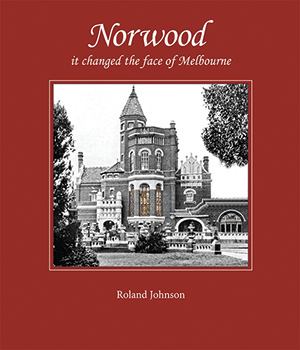
In 1947, student Roland Johnson and his family left inner suburban Northcote where he had grown up, to live in what the media later described as “an extraordinary historical curiosity”. It was located at 100 The Esplanade, Brighton Beach, and was called Norwood. Some sixty-five years later, Roland tells how Norwood came to be. He brings to the work the keen eye of the engineer. First, though, we get a vivid pictorial walk-through tour. Then he takes us back to the earliest years and what made the city of Melbourne great so quickly in its role as a colonial settler society in the 19th century. The colony of Victoria prospered too. For those who enjoy a bit of nostalgia, this book provides it through many of its themes of business, land and sport in 19th century Victoria. The author sets the scene in earliest Melbourne and then we see in great detail marvellous Melbourne at the end of the 19th century. It’s a farrago of tales and memories about the lives of people characterised as the new rich who grew wealthy around gold and land speculation. Many of those were the people who built homes that fitted the description that John Kenneth Galbraith famously coined as evidence of “conspicuous consumption”. Many did it with other people’s money. The book takes us back into the time of secret composition of creditors, examining some of the ‘best names’ who secretly (as the law allowed) failed to pay those to whom they owed money. We see the crash of banks, land companies, tram companies and brick makers. In this sense the book is a reminder of how fragile our economy has been over the years. The volatile economy has always been with us. Little has changed in that regard. Perhaps Norwood was one of the most flamboyant and spectacular examples of the homes dreamt about and built. Whilst the completion of Norwood survived the end of the land boom, unlike many other contemporary structures and businesses, the house never won the admiration and protection that so many other dwellings and public buildings constructed at this time were able to achieve. Architects and others, who later may have fought to save it, seemed not to care about it, and down it came in the 1950s to make way for contemporary development, in keeping with those times.
Hon. John Cain, Premier of Victoria 1982-1990
back to contentsContacts
Posted as an image to prevent spammers from using them.

[last updated 15 January 2015]
© 2013-2015 Roland Johnson. Hosted by WhiteDogGreenFrog. Site designed and maintained by Seventh House Communications.